Downtown Cairo: Where Every Era Still Walks the Streets
- The Rise Of Immigrant/Expat Communities In Egypt In the 19th Century
- Paris on the Nile: How Khedive Ismail Reimagined Cairo
- Downtown Cairo’s Open-Air Museum: Borrowed Style, Native Soul
- Old Walls, New Life in Downtown Cairo
- Cinema Radio (Cinema & Corridor)
- Assicurazione Generali Di Trieste
- Maison Groppi (a.k.a. Groppi Cafe)
- The Greek Club
- Café Riche
- A Neighborhood Still in Motion?
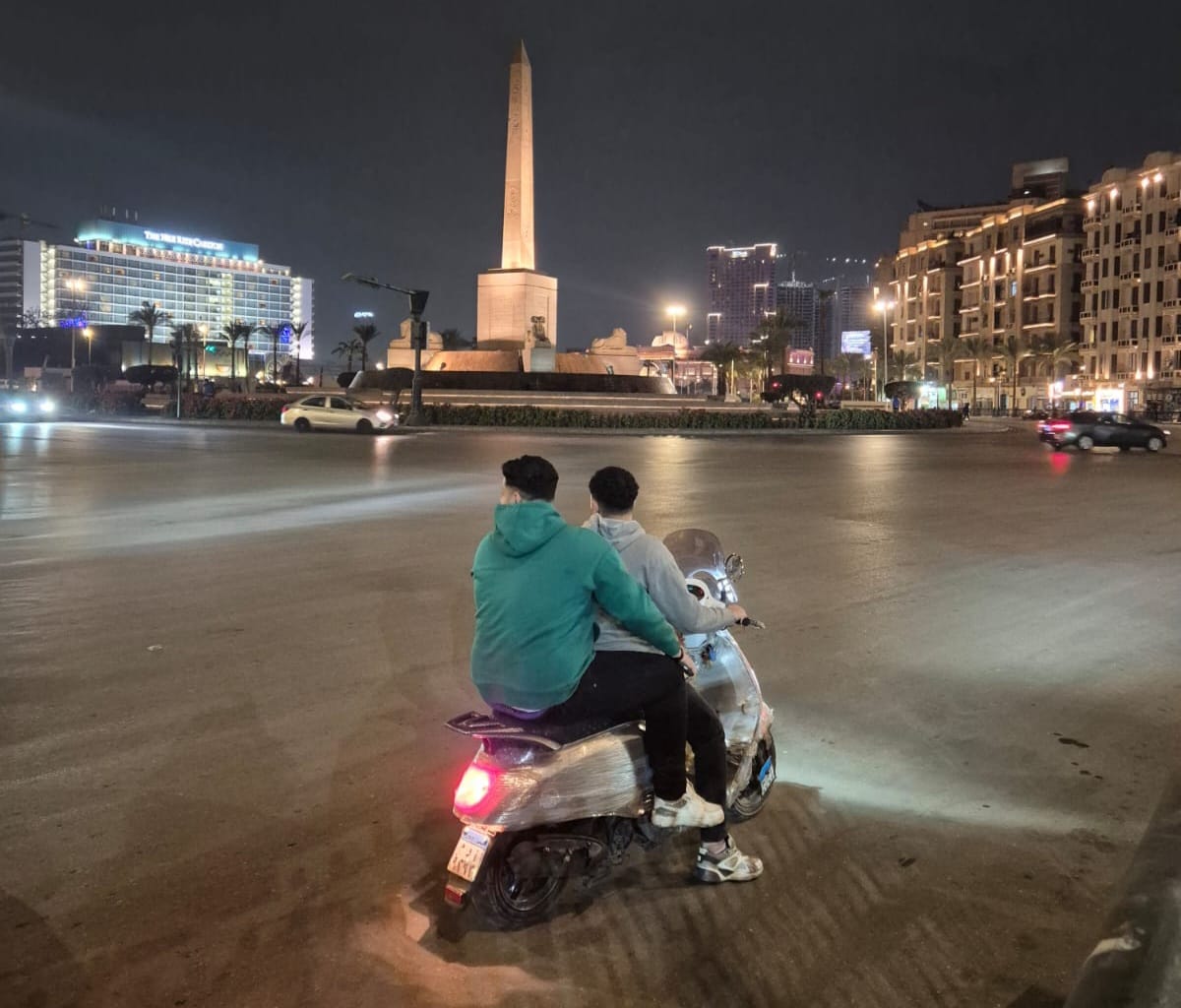
The Rise Of Immigrant/Expat Communities In Egypt In the 19th Century
At the beginning of the 19th century, Egypt was torn between the rule of the Ottomans & the Mamluks between 1801 & 1805, after the French led by Napoleon Bonaparte were defeated. Muhammad Ali arrived with an Albanian Ottoman military contingent sent to fight the French, he seized power by not taking sides to gain the general public’s support. He eventually got rid of both sides to become Egypt’s ruler, and committed a brutal massacre against the Mamluks in what’s known as “the massacre of the citadel” in 1811.
Did you know that the area of El Darb El Ahmar -where Mui’z street and the old market lie- literally translated to red street/way was named so, due to Muhammad Ali’s massacre, which flooded the street with blood of the Mamluks -how gross!
His reforms set Egypt on a path of rapid modernization — infrastructure, industries, and trade networks all expanded, with investments in railroads, ports, and public works, and the cotton boom drawing in foreign technicians, merchants, bankers, and entrepreneurs. Later legal changes, like the establishment of mixed courts and reduced taxes, made the country even more attractive to foreign investment and long-term settlement.
This dynamic led to a multicultural and multi-ethnic society in which minority communities -mainly immigrants/expats from Europe, who came as workers, experts, and/or elites- played an economic, social, and cultural role in everyday life, not only as colonial elites or foreign laborers, but also as integrated residents who built their lives, established institutions, and contributed to the country’s modernization.
Among these examples is the Swiss entrepreneur Giacomo Groppi, who found new consumer markets in Egypt; the emergence of an expatriate community and a cosmopolitan middle class created a demand for European-style cafés, pastry shops, and leisure venues. Groppi was able to open chocolate shops and ice cream parlors in Cairo & Alexandria and immediately attracted customers among both locals and foreigners.
Paris on the Nile: How Khedive Ismail Reimagined Cairo
In 1863, Khedive Ismail came to power. Educated in Europe as a young man, he had developed a deep admiration for European — and especially Parisian — architecture, an admiration that would go on to shape the future of his capital. Under his rule, Egypt continued the modernization Muhammad Ali had begun, but Ismail took it a step further: with the help of Ali Mubarak Pasha, he developed an entirely new urban vision for Cairo, inspired by Baron Haussmann’s transformation of Paris — wide avenues, modern neighborhoods, and a spatial layout to match.
The turning point came in 1867, when Ismail traveled to Paris to attend the Exposition Universelle, the world’s fair of its day. He returned captivated by what he’d seen — and resolved to build Cairo in its image.
The opening of the Suez Canal in 1869 turned Alexandria, Cairo, and Port Said into hubs of global trade, multiplying economic opportunities and encouraging the establishment of sustainable foreign communities, complete with their own schools, associations, and newspapers.
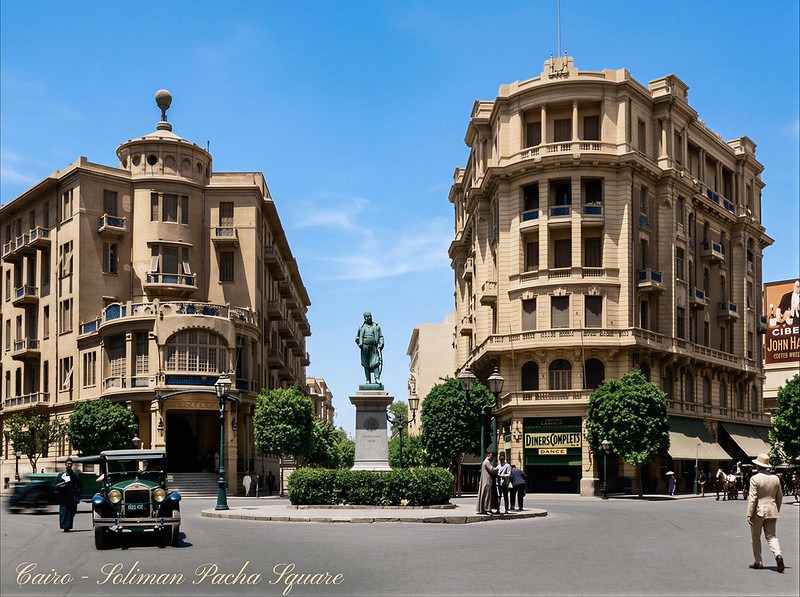
Back in the day, Downtown Cairo — the Khedivial, “Europeanized” district — became a hub for entertainment, theaters, shops, and offices. Having a presence in the Talaat Harb/Soliman Pasha neighborhood meant having access to the elites, tourists, and colonial/consular circles.
Today’s city center — Tahrir and Talaat Harb squares, Qasr al-Nil Street, Garden City, and Zamalek — is a direct result of this ambitious project. Cairo, once perceived as a whirlwind of colors, languages, and sounds, was reshaped into a cosmopolitan capital, whose dynamism, charming chaos, and diversity remain familiar to this day.
*This article doesn’t include Zamalek Island or Garden City neighborhood, as they both deserve separate articles of their own.
Downtown Cairo’s Open-Air Museum: Borrowed Style, Native Soul
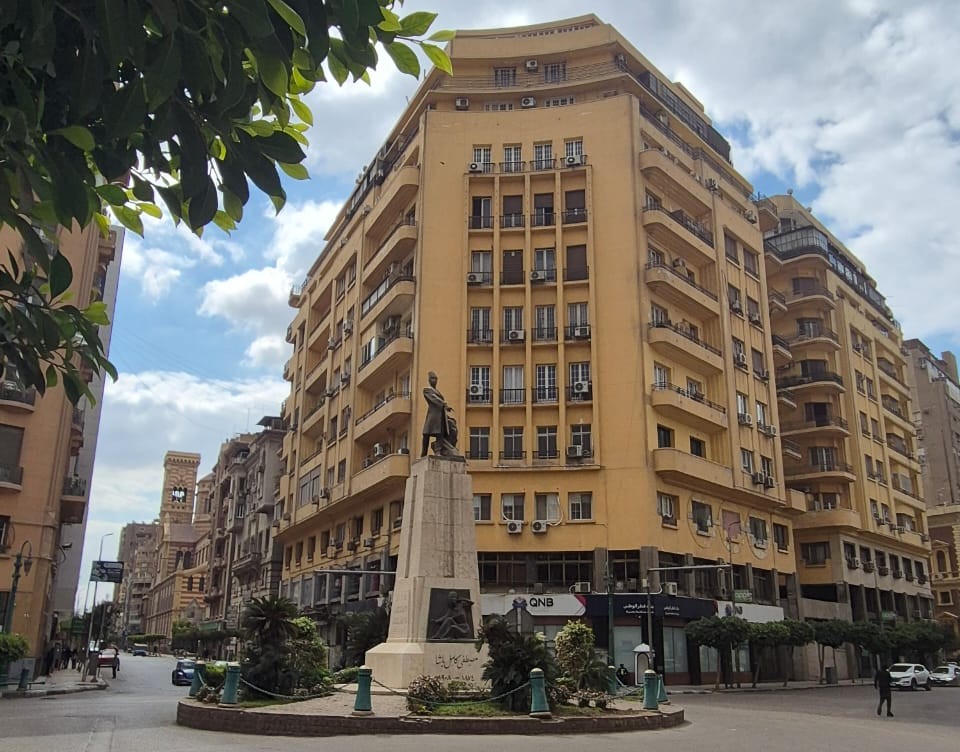
The neighborhoods of Khedival Cairo are among the most visually appealing in Egypt, they remain engraved in visitors’ minds due to the uniform height of the buildings, the harmony between block shapes, and their architectural splendor.
As you stroll through these neighborhoods, your attention will inevitably be drawn to the semicircular facades of the buildings surrounding the circular squares, such as Talaat Harb and Mustafa Kamel Squares. Their architecture seems to blend seamlessly with the flow of the square, lending it a unique elegance.
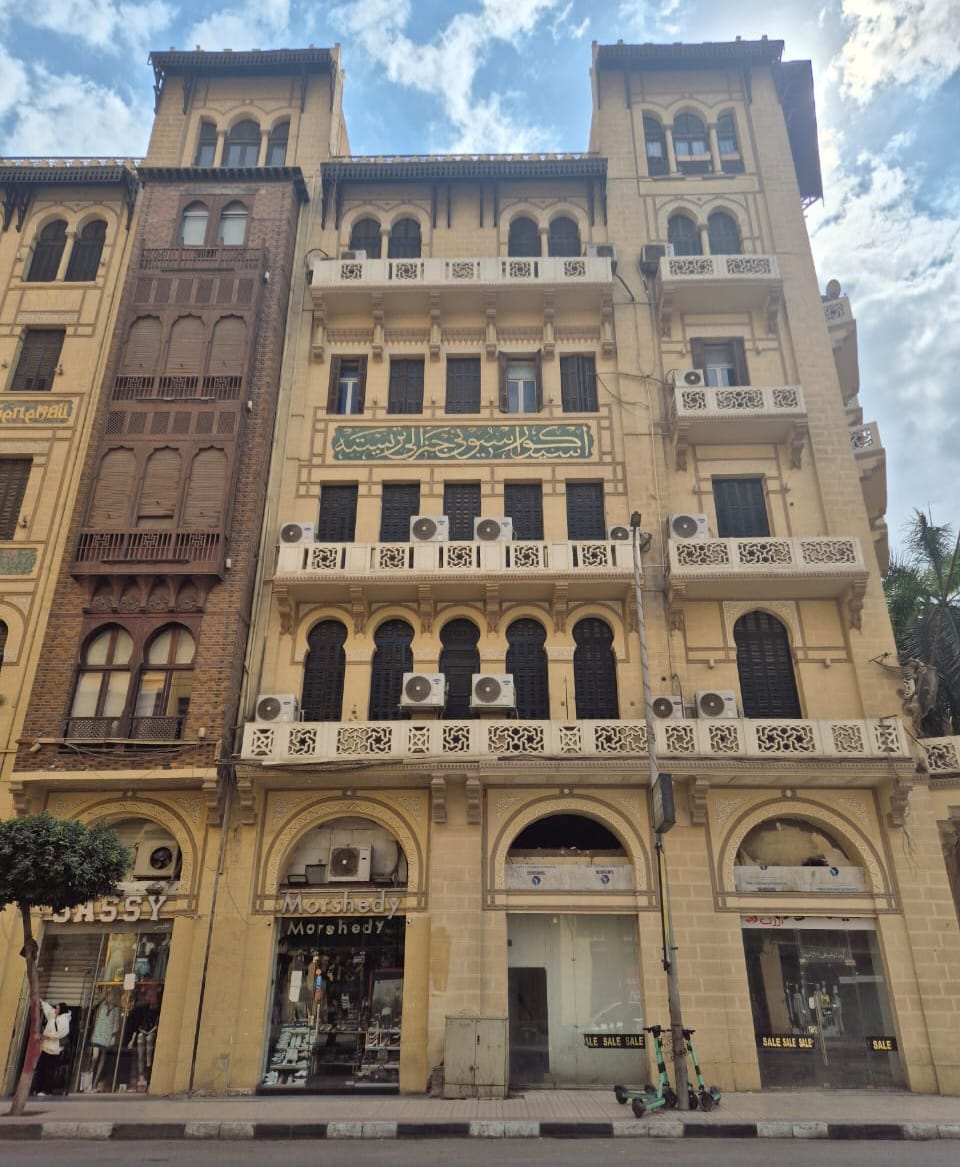
Downtown Cairo is often described as an open-air museum, showcasing the work of foreign architects from France, Italy, Austria, and Great Britain who helped bring about Egypt’s urban renaissance. They demonstrated great creativity featuring diverse European styles such as Neoclassical, Neo-Renaissance, and Art Nouveau, giving those neighborhoods a unique aesthetic value, while also giving rise to a flourishing new generation of Egyptian and Arab architects, who adapted those styles to local taste, and the result was an elegant, highly diverse neighborhood that is both European and Egyptian.
Old Walls, New Life in Downtown Cairo
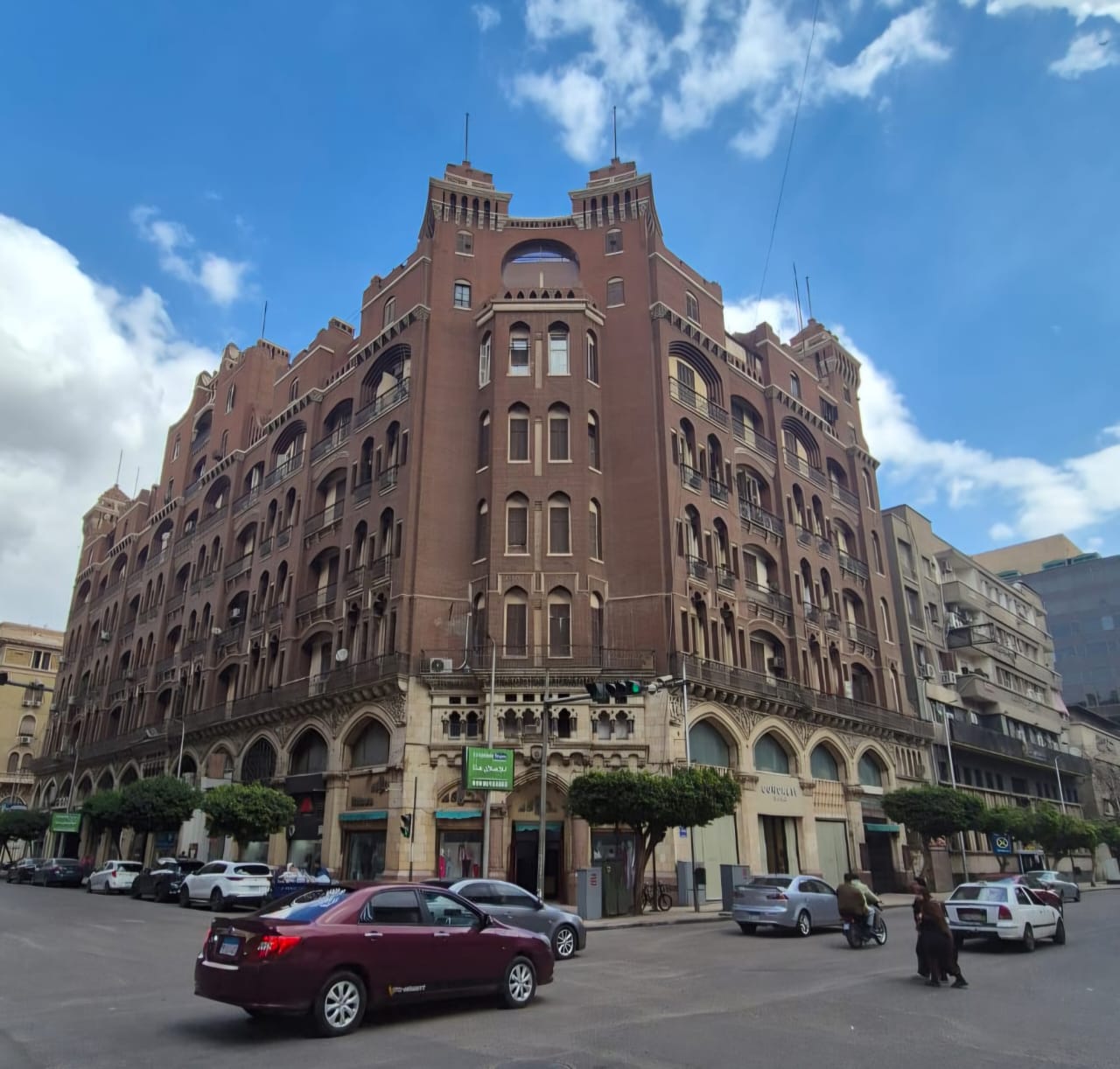
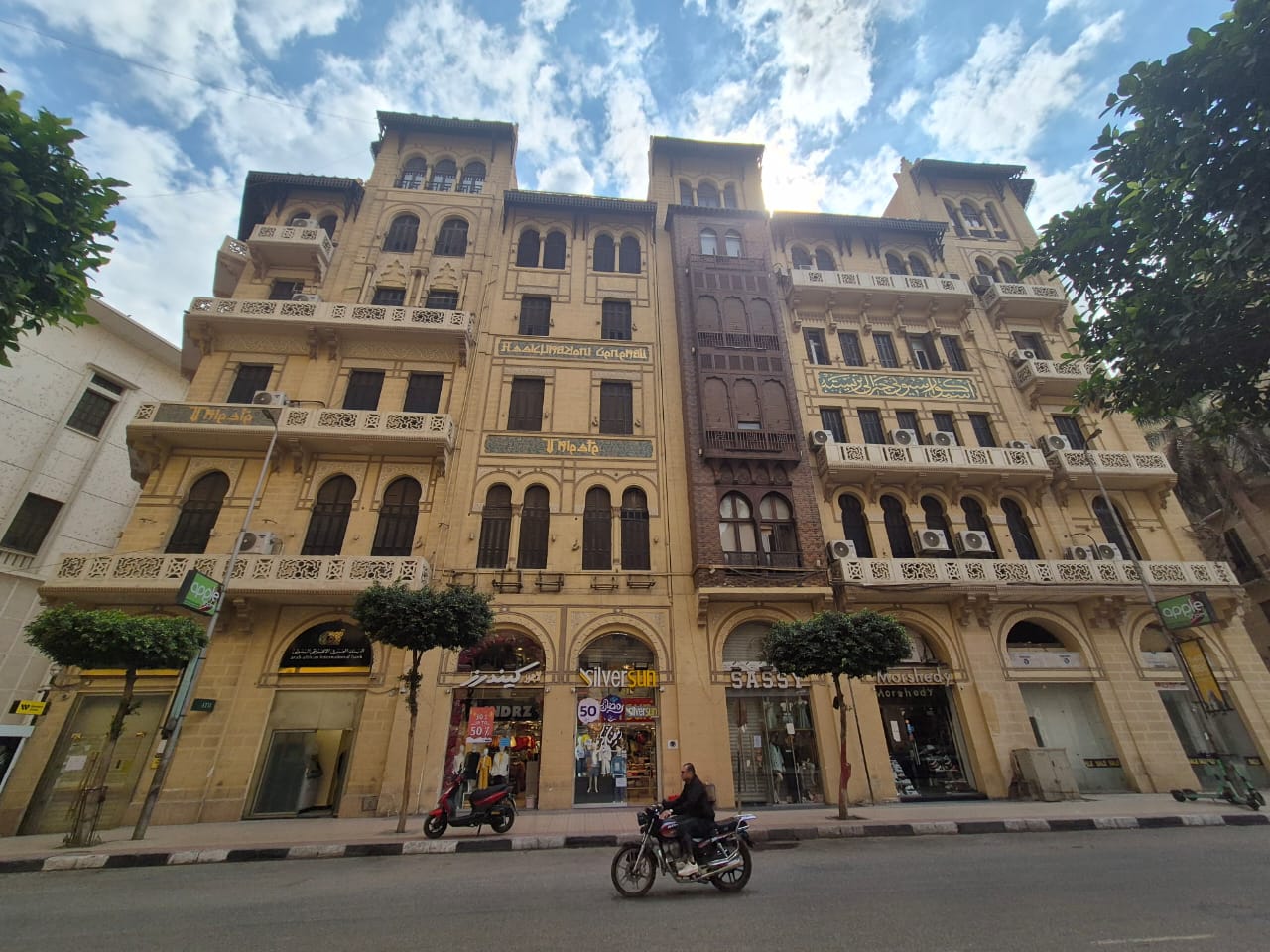
It was designed in Neo-Mamlouk style with a European attire, by Italian-Slovenian architect Antonio Lasciac, and used to be owned by Assicurazione Generali, an Italian insurance company headquartered in Trieste, but now is a beautiful historic building to stare at and travel back in time.
Maison Groppi (a.k.a. Groppi Cafe)
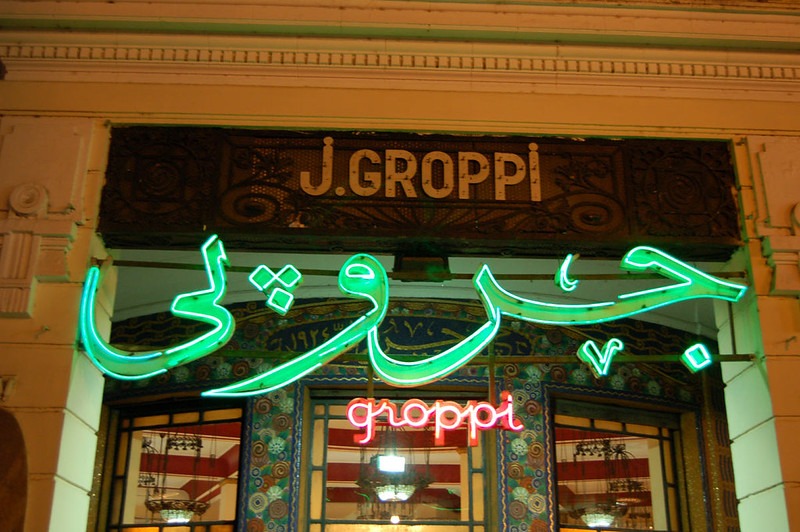
A legacy built by a young Swiss entrepreneur named Giacomo Groppi from Lugano in Ticino, who moved to Egypt due to its booming economy around 1880, after receiving education in pastry and chocolate making in Switzerland, he worked for a few years with another Swiss fellow at Maison Gianola in Alexandria -has nothing to do with Gianola in Portsaid-, he partnered with him, until able to buy their business and re-branded it to Maison Groppi. Giacomo was the first to hire a female staff, to introduce whipped cream “Creme Chantilly” in Egypt, then later his son Achille introduced “Ice Cream” for the first time too.
Places like Groppi drew Egypt’s own elite, politicians, artists, and intellects, as well as foreign ones too. Rumor has it that German Field Marshal Erwin Rommel vowed to ‘drink tea at Groppi’s’ once he took Cairo — a saying more myth than confirmed quote, but one that captures just how central Groppi’s had become to the city’s identity, even in the eyes of its enemies.
My mum still vows for their Sucre d’Orge -sugar barley- lolipopps that only Maison Groppi made, she used to eat them as a child, brought to Dakahleya in Mansoura where she grew up, by her dad or any family member who frequented Cairo, but also their Marron Glacé -candied chestnut- and their unique invention Boule de Neige -snow ball cake- that I was very lucky to try in the late 1990’s on my sister’s birthday. As for my dad, he still vows for their Trois Petits Cochons -three little pigs- desert which was a flaky choux pastry filled with Maison Groppi’s premium ice cream, as well as their Mille-Feuilles.
The business was sold in 1981 to an Egyptian group. The one on Talaat Harb Square, which is the most beautiful is under renovation, the one in Adly Street known as Groppi Garden has recently re-opened, with a third one in Korba, Heliopolis that is open too. Groppi a place whose golden-age glamour (Lawrence of Arabia, wartime elite, Cairo’s belle époque from 1867–1952) has faded, yet its walls and garden still carry that story, you just have to know where to look.
The Greek Club
Founded in 1906 as a social club, well a place for the Greek community to meet, then later became a restaurant and a public club.
View this post on Instagram
Forget about its indoor sitting area, its outdoor terrace -only if you can deal with the noise- offers a panoramic view of Talaat Harb Square, with its buildings and some historic shops. Go there for a drink, accompanied by a plate of home-made fries.
Café Riche
Opened around 1908, its first owners were likely Austrian, then French who named it Cafe Riche around 1914, and finally Greek, before it was purchased by an Egyptian man from Upper Egypt around the 1960’s. It used to be one of the most famous gathering places for intellectuals, politicians, and had a cosmopolitan clientele -such as; Nobel Prize winner Naguib Mahfouz, Abbas El Aqad, Um Kulthum, nationalists, and artists. It exemplifies the role of cafés as inter-community gathering places. It’s worth stepping into for the history alone, even if, in my experience, the service doesn’t quite match the legacy.
It has played a pivotal role in 1919, during Egyptian uprising against the British occupation, where Egyptian nationalists used it as a hideout, as well as a place to print out wartime propaganda posters.
View this post on Instagram
The building was recently acquired by Al-Ismaelia company, which will retain the café and convert the rest of the building into a boutique hotel.
A Neighborhood Still in Motion?

Leave a Reply
You must be logged in to post a comment.