
Why Giza Pyramids Get All the Fame (And Why “Maybe” They Do Not Deserve It)
Saying that Giza pyramids are the most important monuments in Ancient Egypt “maybe” makes sense visually — but historically, it’s misleading.
Giza Pyramids or Giza Plateau to sound more archeologically correct, which has more monuments than the Pyramids of Kheops, Khefren, Menkaure & the Sphinx, has got its fame as it’s home to the last surviving wonder of the ancient world, representing unparalleled advancement in engineering, staying in the lead for almost 4000 years as the highest man-made structure in the world, it’s pure genius to say the least till today… but this success didn’t happen overnight, did it? And we have living proof of it.
What if I tell you that you can watch in real life how the idea of building pyramids started? All the steps, trials, and errors leading to building a perfectly smooth-sided pyramid?
Get ready for one hell of a ride…
Before Pyramids – How Burial Looked Like?
Ancient Egyptians cared a lot about their afterlife to the extent that they built their resting places in hard stone, while their houses were built from mud-brick, which is why we hardly find remains or ruins of houses & palaces. And besides mummification of the deceased king, queen, elite, noble; they were buried with all their favorite belongings that will aid them live happily and comfortably in their afterlife; from food, wine and clothes to furniture and statues of servants known as Ushabty.
Fun fact: A mummy of a lady was found, in her scans, she obviously had lots of tooth issues, in her tomb they found meat among her belongings, apparently she was buried with what she craved most and was forbidden from in her lifetime (poor thing!).
During the Predynastic Period kings & elites were buried in a simple oval shaped pit, in fetal position with their face facing west -where the sun sets to mark the end of life and the beginning of afterlife-, however in the Early Dynastic Era burial became in bigger pits, more of rectangular shaped, then there was the transition to “mastaba” which happened as of the 1st and 2nd dynasty of the Old Kingdom where the king was buried with more belongings that would aid him live a happy life once resurrected.
So, what is a mastaba?
A mastaba is a flat surface above the ground, usually built around agricultural lands, so that peasants can rest on them, have a meal/snack, or meet with fellow peasants, friends, and family members to discuss work matters and/or gossip. And since Ancient Egyptians were highly influenced by their surrounding -notice how hieroglyphic script is symbolic of everything that Ancient Egyptians spotted in nature, the script is known as “the script of birds”-, they might have started using mastabas for burial, as mastabas were widely present all around, and it only made sense to make them as their resting place too.
Baby Steps Leading To The First Pyramid
It might have been King Djeser’s destiny too to be buried in a simple one storey mastaba, yet what started as one level, turned into 6 of almost 62 meters high, namely; the Step Pyramid of Saqqara.
At first a square shaped mastaba was built of around 8.5 high while the enclosure wall of the funerary complex was around 10m, so maybe what happened is that King Djeser or Imhotep -his genius architect- felt it was inappropriate to let the enclosure wall be higher than the resting place of the king, so he started off by making the square shaped mastaba wider, then higher.

Djeser: The Real Evolution – First Funerary Complex
The idea of building a pyramid instead of a simple mastaba was probably the idea of King Djoser (a.k.a. Neterikhet: the sacred body) or his genius chief of engineers Imhotep.
Djoser is the 2nd king of the 3rd dynasty known as the dynasty of “Pyramid Builders”- more about this later. Egyptologists tend to consider him the founder of this dynasty, given the advancement on many levels under his reign.
The importance of Djoser’s Step Pyramid, isn’t just the pyramid itself, the pyramid is just one element of many. Djeser was the 1st king -so far- to have built an 1. entire funerary complex with several new elements, 2. entirely of cut limestone, and 3. the first life-size royal statue.
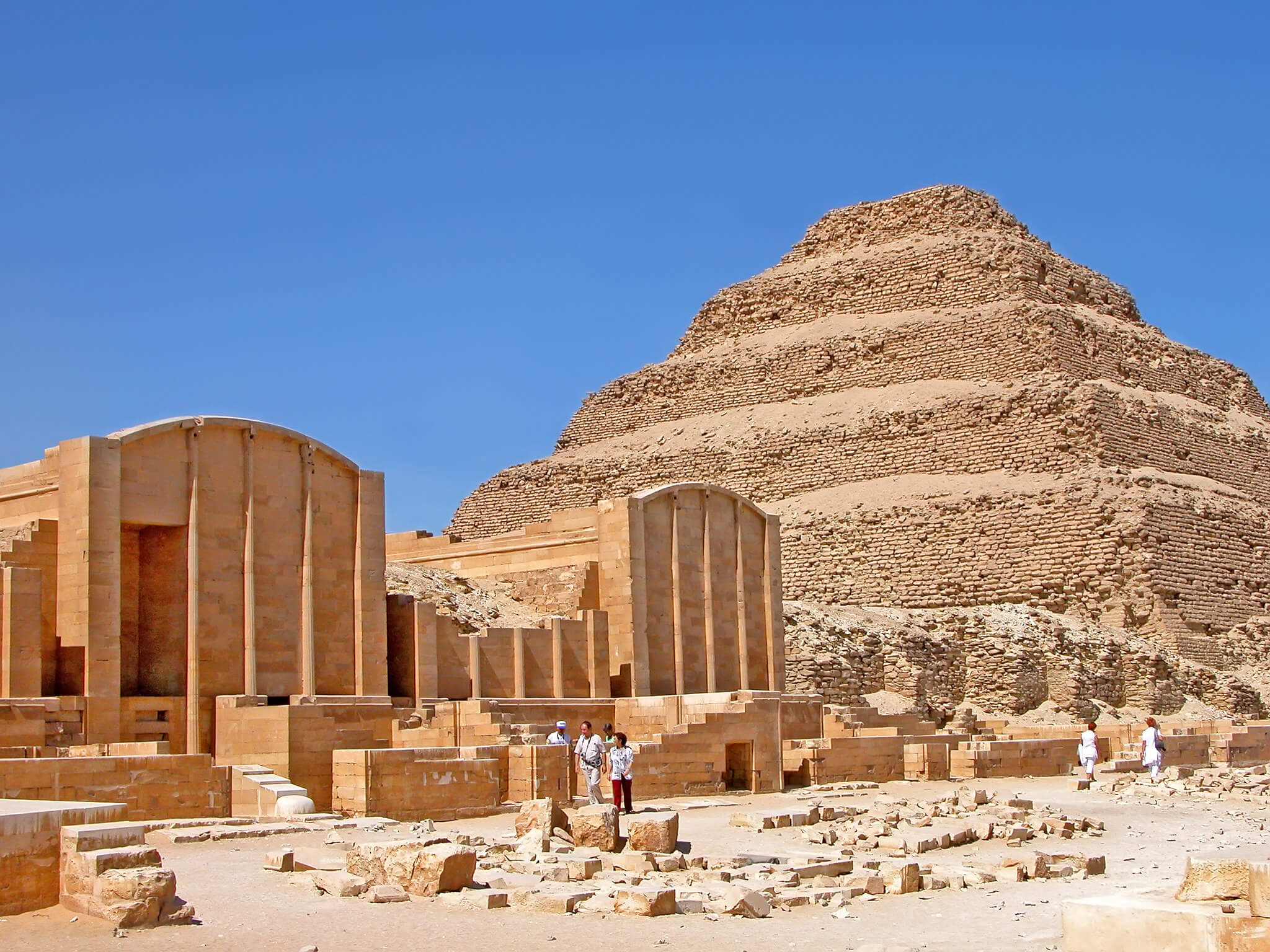
So, when you visit “the” step pyramid, it’s not just A pyramid, but too many elements that were built for the very first time, to name a few;
- An Enclosure Wall around the complex with 14 false doors to let the king’s spirit come in and out to receive offerings and be connected to the world of the living, and one functional entrance on the south east
- A Heb Sed Court; where kings in their lifetime celebrate being in power every 30 years -celebration can be made more often, to remind people of his power-, but King Djeser decided to replicate the celebration in his afterlife too
- A Southern Tomb; while the king should be buried inside the pyramid located in the north, Djoser or Imhotep decided to dig a tomb in the south which might have been dug to test the ground, or to let the Ka -the spiritual double- of the king rest, just like his “ba” will inside the pyramid
Mastabas – Function, & Afterlife Logic.
Ever asked yourself why the step pyramid took this shape? I was mind-blown when I learned that the idea was to build a “step” pyramid so that the “ka” of the king can easily ascend to the sky, in their journey to the afterlife!
Snefru: The Laboratory Phase
Snefru; founder of the 4th dynasty, believed to have continued building what “probably” his predecessor King Huni couldn’t finish “Meidum Funerary Complex” in the same step pyramid style as Djeser’s with an enclosure wall, but this time he has decided to go on a new venture, and experiment building a smooth-sided pyramid.
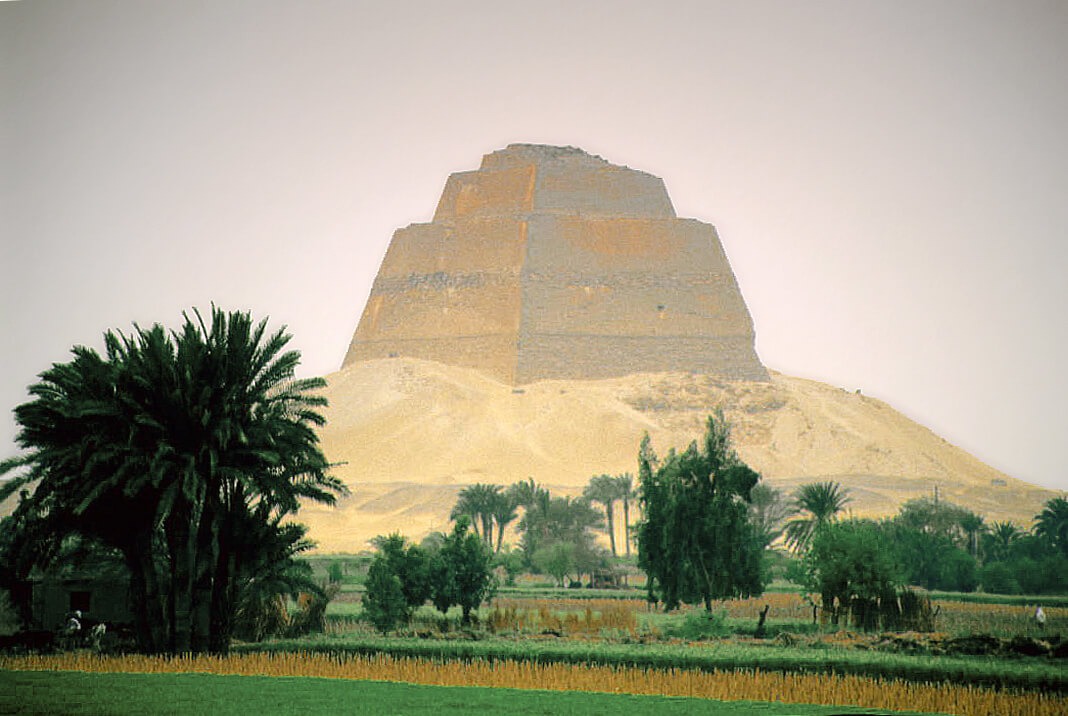
It’s not clear whether the original plan was to build a step pyramid, then the idea evolved into modifying the structure into a smooth-sided pyramid? or building a step pyramid was just a stage that made sense, before filling the gaps to turn it into a smooth-sided pyramid? What is likely is that the gap filling process or casing happened after the completion of Dahshur’s Bent & Red Pyramids -more on those in the next paragraphs… Maybe influenced by the successful attempt of the Red Pyramid? Who knows?
Why Snefru’s “Failure” Is Historically Valuable?
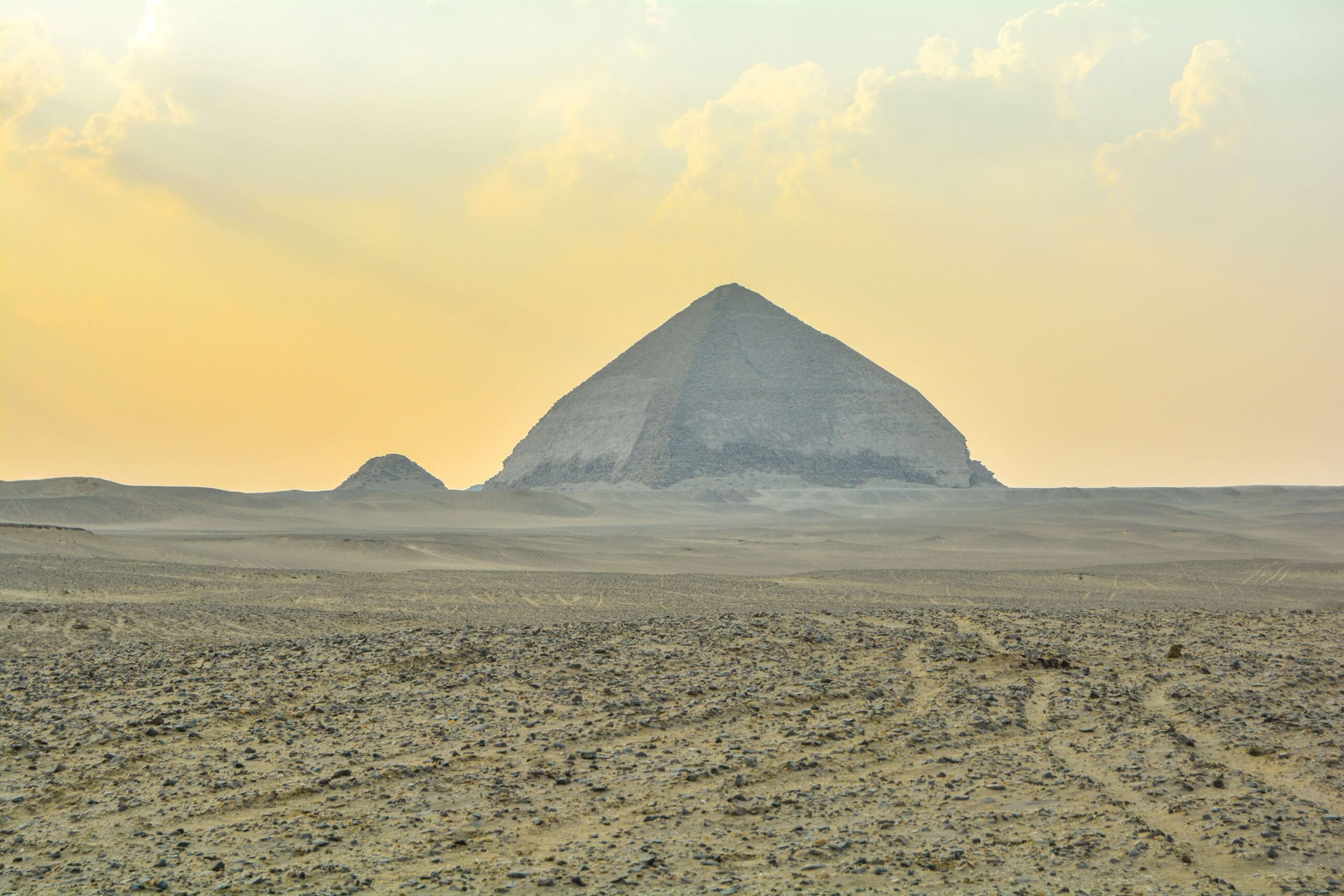
Dahshur is considered the lab of pyramids, where Snefru built his Bent Pyramid, destined to be smooth-sided, but while building it, they found out it probably won’t stay standing if they continue with the same angle of around 54 degrees, so they changed it to approximately 43, which explains its shape.
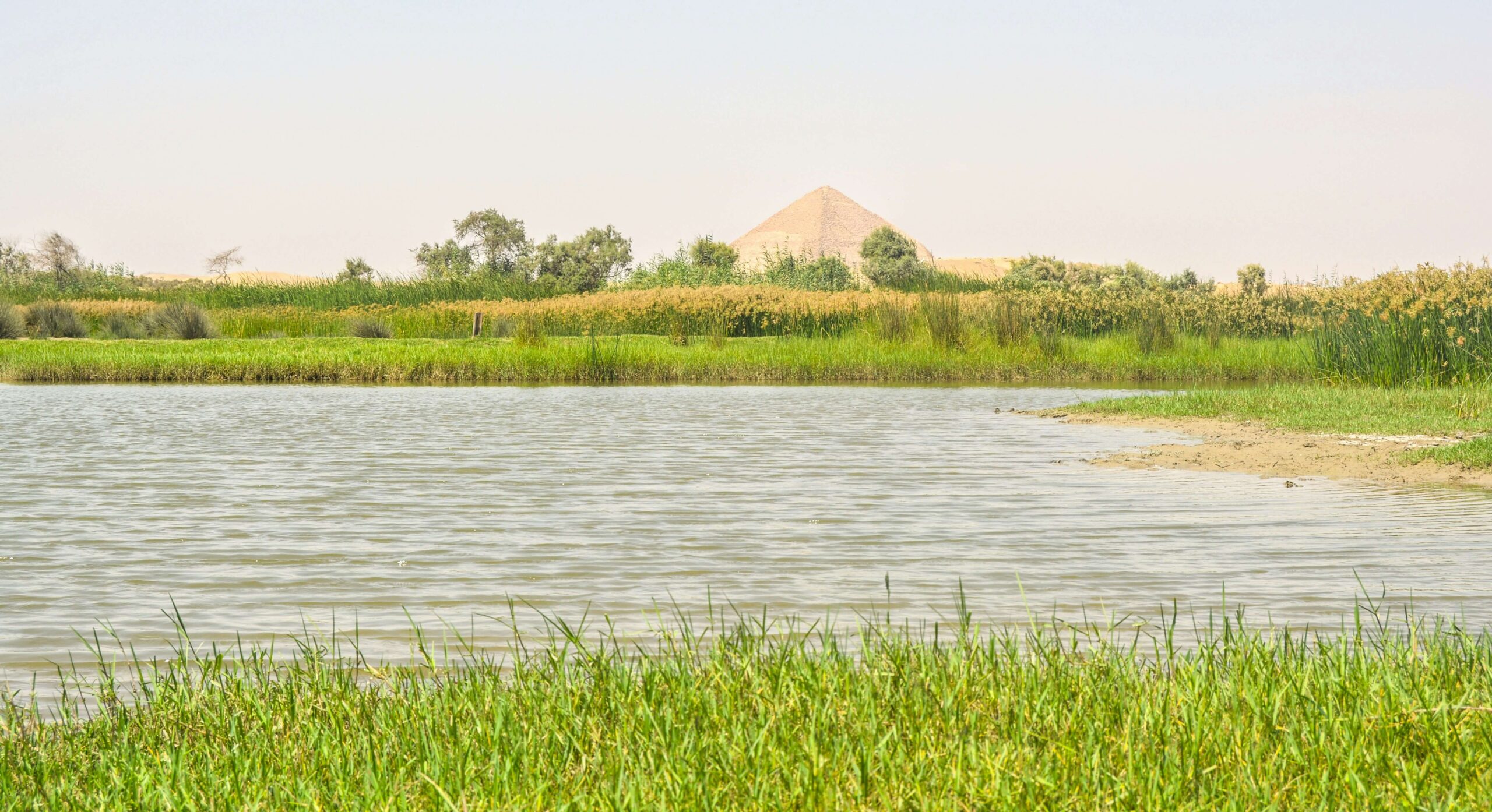
Next trial was the Red Pyramid, named so due to its color from reddish limestone, considered to be the 1st successful attempt to build a fully smooth-sided pyramid -around 43 degrees-, which paved the way to Kheops Pyramid.
Giza: Perfection, Not Invention
Pyramids didn’t start as smooth triangles like the ones at Giza. Early ones, like Djoser’s, were step pyramids—basically stacked layers. Under Sneferu, Ancient Egyptians began experimenting with smoothing those steps by first casing a step pyramid -Meidum Pyramid- or changing its angle -Bent Pyramid- to create a triangle shaped pyramid, but they faced real engineering challenges, like instability and collapse. You can actually see this trial-and-error at Meidum and the Bent Pyramids. By the time they built the Red Pyramid, they had finally mastered the technique. So the triangular shape isn’t just symbolic—it’s the result of architectural innovation and problem-solving over time.”
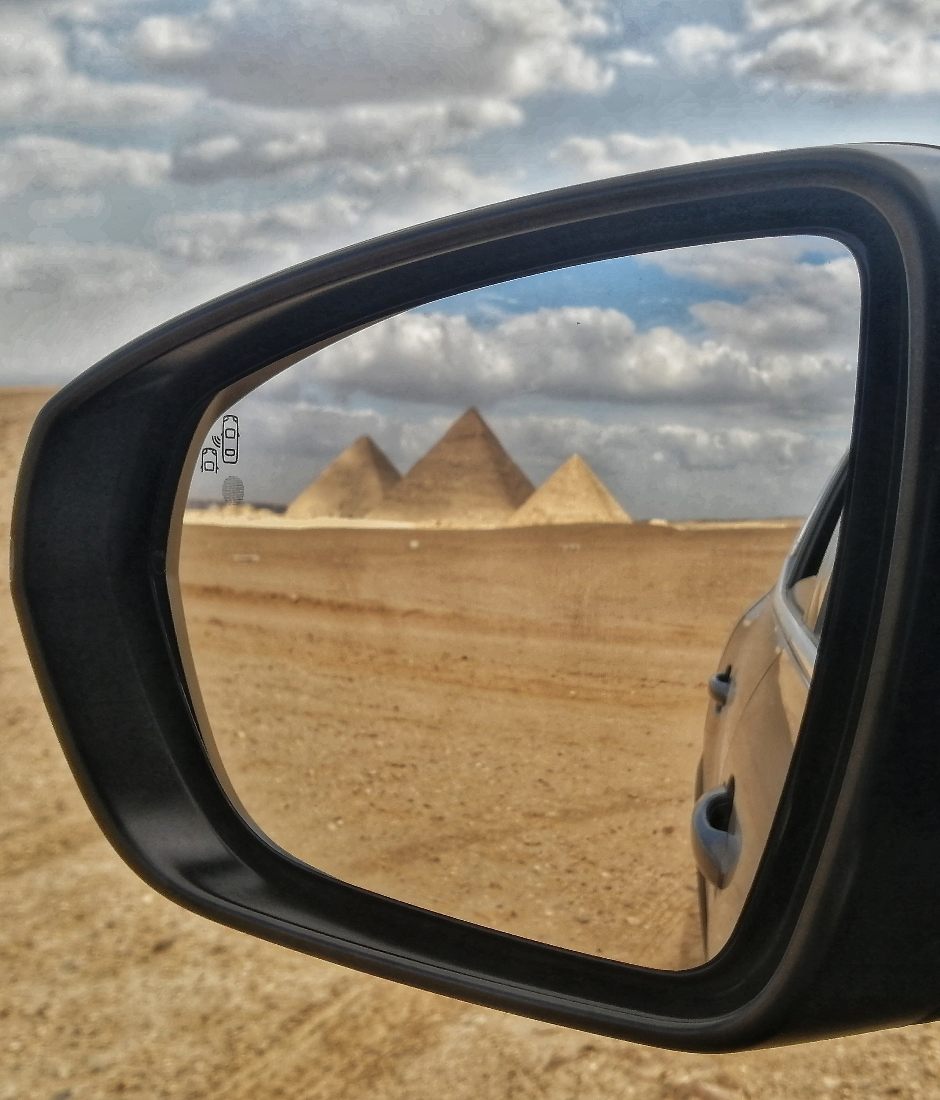
By now you understand that Giza Pyramids aren’t the beginning of the story, their greatness is the result, of many experiments, that led to refinement until reaching perfection that is called Kheops Pyramid.
Other than the Pyramid of Kheops, the only other depiction of the king is a 9cm statue believed to have been sculpted during the New Kingdom, displayed at the Egyptian Museum of Antiquities in Cairo… weird, huh?
Evolution Of Pyramids Construction In A Chronological Order
- Step Pyramid in Saqqara Necropolis – 1st Egyptian -step- Pyramid part of an entire funerary complex with too many new elements
- Meidum Pyramid in Beni Suef – failed attempt to convert a step pyramid into a smooth- sided one
- Bent Pyramid in Dahshur – failed attempt to build a smooth-sided pyramid, pyramid angle had to be changed to avoid its collapse, hence its rhomboidal shape
- Red Pyramid in Dahshur – 1st successful smooth-sided pyramid
- Kheops Pyramid in Giza – Perfect, smooth-sided pyramid, the only standing marvel of the ancient world
At this point, you have seen all the steps leading to a perfectly smooth-sided pyramid, but is that it?
Unas Pyramid – The Emergence of Pyramid Texts
The answer is yes and no, while in terms of construction not much has changed, yet Unas Pyramid from the 5th dynasty -which is among the treasures of Saqqara Necropolis- has the 1st time depiction in Ancient Egypt of funerary texts on the walls of his pyramid. Those texts are prayers and spells usually inscribed on tomb walls and sarcophagi, to aid the king in his journey to the afterlife, and are commonly referred to as Pyramid Texts, inscribed in Hieroglyphics.
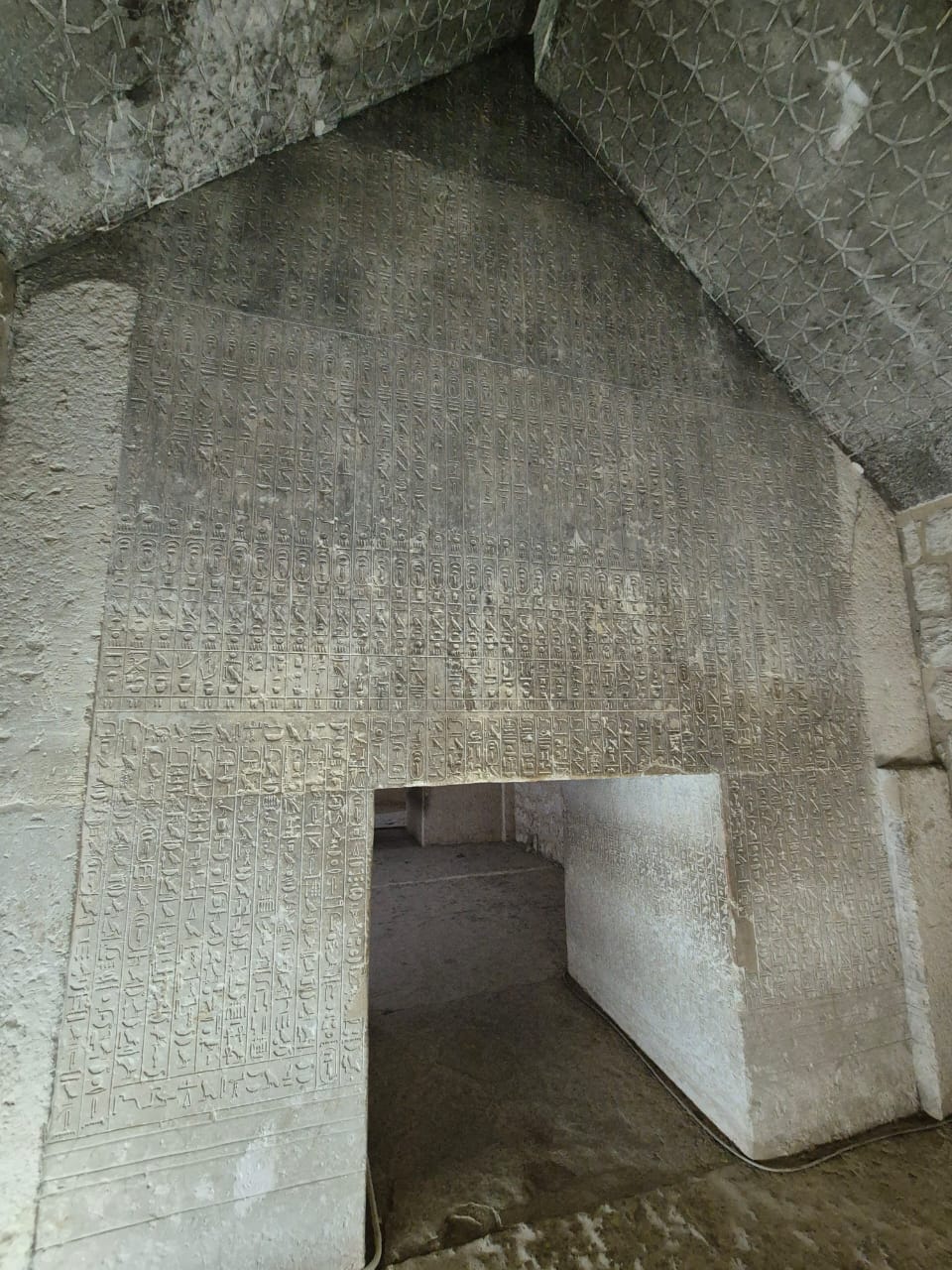
Unas Pyramid closes at 12 PM, if you miss it, you can visit the Pyramid of Pepi I which also has pyramid texts.
Once you start looking at Egyptian pyramids this way, it becomes difficult to explore them the way you originally planned, once you learn about their evolution, it’s impossible to skip visiting their very first attempts.
Sites like Saqqara and Dahshur, but also Meidum stop being “optional” and start feeling essential.
If you’d like help building an itinerary that reflects this perspective — historically grounded, thoughtful, and unhurried — you can find more details on my site.
Notes About Hieroglyphics, Ancient Egyptian Language, and Modern Day Egyptian Language
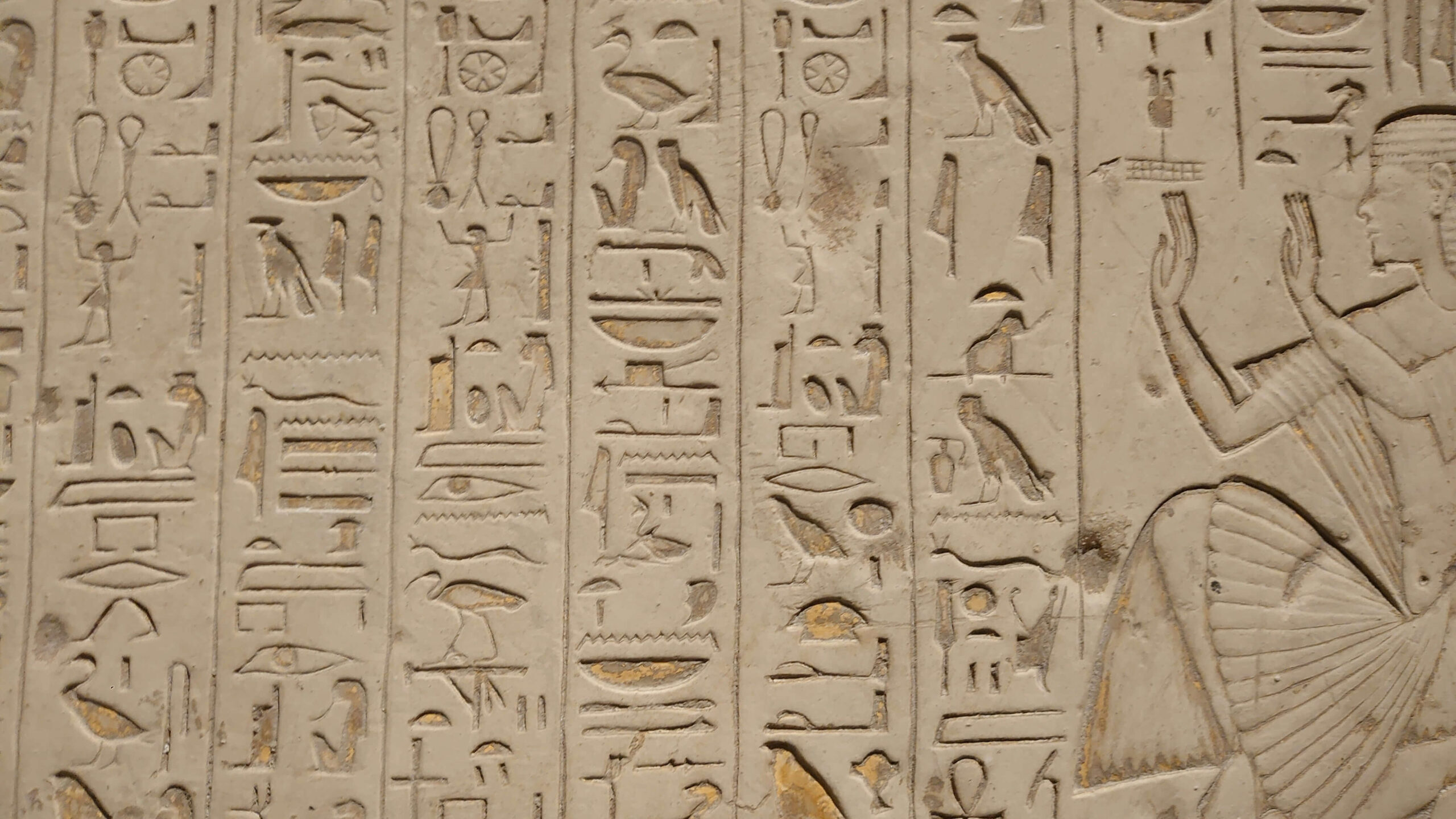
- It’s wrong to say Hieroglyphic language, hieroglyphic is a script like Latin, and not a language, the language is Ancient Egyptian
- Hieroglyphic is a sacred script used in a religious context, and is commonly referred to as “the script of the birds” given the use of too many bird signs in it like the Egyptian vulture, the chick quail, and the owl
- This script wasn’t used by commons, only the elite -kings & queens, high-ranking officials, priests, and rich individuals- were allowed to use it
- Some hieroglyphic signs represent one sound, other signs represent two, three, even four
- Hieroglyphic grammar is SO similar to standard Arabic -and is as complicated too.
- The colloquial language spoken in Egypt is called “Masry” -derived from the word Masr which means Egypt in Arabic- , it’s a mix of Ancient Egyptian language, Coptic language -which is the last stage of Ancient Egyptian language-, standard Arabic, Turkish, French, Greek, English and Italian -influenced by; either former colonial empires, or large communities of immigrants & expats who lived in Egypt in big numbers from the late 1800’s until the nationalization of the Suez Canal.